Chemical & Physical Peptide Evaluation
Peptide Quality Assurance & Purity Screening Boc Sciences

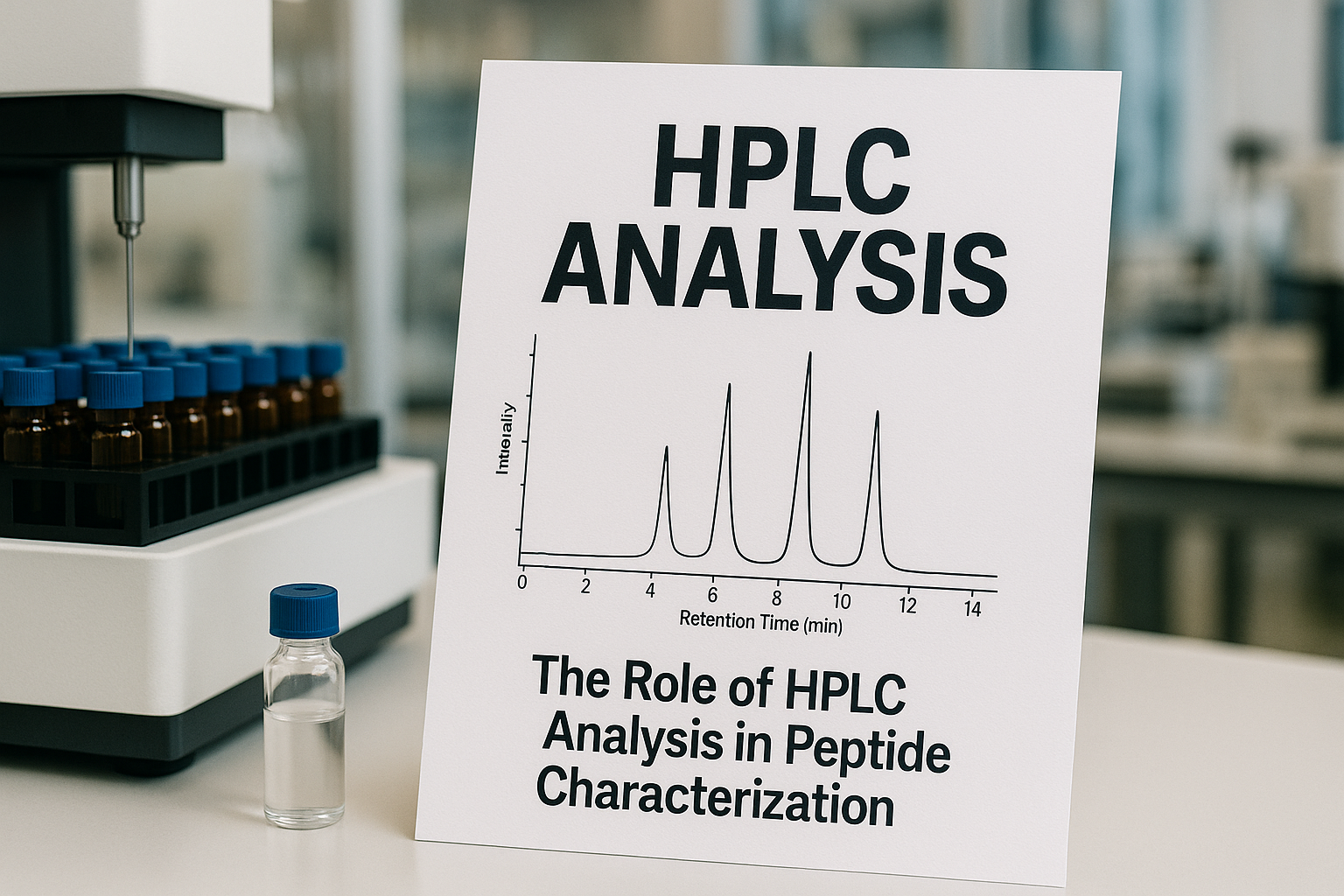
- The chromatogram is the most vital aesthetic data element on an HPLC peptide test record.
- Asparagine and glutamine residues can undertake deamidation, transforming the peptide's fee and hydrophobicity.
- This is the gold criterion for peptide identification-- it verifies both the structure and the sequence.
- A contemporary HPLC system includes several integrated elements, each serving a specific feature in the splitting up and detection process.
Services
Irregular fragment dimension circulation and morphology can affect bioavailability and security. BOC Sciences is geared up with tools like DLS, TEM, SEM, etc, to completely assess nanoparticle size, circulation, and microstructure. For us, purity isn't simply a portion-- it's a pledge of honesty, consistency, and regard for the scientific research being done.
The pureness of peptides is commonly checked making use of high-performance fluid chromatography (HPLC). HPLC separates peptides based on their interactions with a stationary phase, enabling impurities and by-products to be identified and quantified. In addition, mass spectrometry (MS) can be made use of to confirm the peptide's molecular weight and sequence, providing more verification of pureness by finding pollutants and degradation products. If you've ever before obtained a synthetic peptide for a laboratory experiment, you have actually likely noticed a pureness percentage on the certificate of evaluation-- typically worths like 95%, 98%, or even AminoAcidSupplements UK peptide research registry 99%. Peptide pureness is an essential top quality metric that tells you what fraction of a peptide sample is the intended product versus unwanted spin-offs.
Crude, Desalted, And High-purity: Comprehending Peptide Grades
It's feasible to have a peptide that is, claim, 95% pure by HPLC and yet the internet peptide material is something like 70% of the powder's weight (the remainder being water and salts). Do not be alarmed-- this is regular and is typically determined by different evaluations (like amino acid analysis). Peptide pureness is most generally figured out by high-performance fluid chromatography (HPLC) with a discovery wavelength of 220 nm, which is optimum for discovering peptide bonds. This approach divides peptides from impurities and evaluates both target peptides and contaminants, ensuring premium examples for research study.Begin Your Peptide Evaluation Task
With each other, these analytical methods offer the proof base for concluding that a peptide batch is suitable for research study use. One more associated term you may come across is net peptide web content, which is different from pureness. Web peptide web content describes how much actual peptide (by weight) is in the vial relative to non-peptide elements like water, counter-ions (e.g., TFA), or buffer salts.A lot of peptide providers and research study labs depend on a number of well-established logical techniques. All items are sold for study, laboratory, or analytical objectives only, and are not for human usage. Product descriptions and categorizations do not imply any type of restorative outcomes. At Chameleon Peptides, every item ships with comprehensive third-party screening documentation. You can discover more about our analytical testing procedures on our testing and quality web page. A 2016 study released in Nature discovered that greater than 70% of researchers had attempted and fallen short to replicate an additional researcher's experiments.
BOC Sciences, with its durable logical system and expert group, focuses on quality testing solutions for peptide raw materials, peptide microspheres, peptide nanoparticles, and peptide formulation preparations. We work with biotech, pharmaceutical, CRO, CDMO, and academic groups on peptide chemical and physical evaluations that support research study and non-clinical decision production. Contact us today to review your peptide series, sample standing, and analytical goals. The software application attracts boundaries around each optimal and determines the location underneath. The pureness portion originates from comparing the area of the primary optimal to the overall location of all identified peaks. A lot of records include a table listing each peak's retention time, area, and percent of total area.